An air traffic control system failure that sparked widespread travel chaos earlier this month was caused by a “software defect”, the UK’s national air traffic service (Nats) has said.
The problem happened “in the space of a millisecond”, Nats said, leading to the system producing corrupted data.
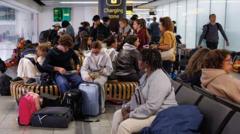
The failure led to more than 2,000 flights being cancelled and hundreds of thousands of passengers affected, with some sleeping on airport floors or getting stuck overseas.
The incident prompted questions over the resilience of Nats’ systems, and some airlines questioned the position of its chief executive Martin Rolfe.
There has also been anger from passengers about how much support they got from airlines, and about the fact that they are unlikely to be entitled to compensation because the regulator judges the situation was extraordinary circumstances.
Flights in and out of the UK’s main airports were affected, including Heathrow, Gatwick, Luton and Glasgow.
The disruption took days to completely resolve because of the number of planes and crew left out of place.
The government had previously ruled out a cyber attack, and last week the Ministry of Defence denied a report that a military aircraft was to blame.
In an initial report, Nats said the defect happened in the system which “underpins the management of UK airspace”.
Martin Rolfe said: “I would like to apologise again, very sincerely, to everyone who was affected last week.
“It’s our job to get people where they want to go, quickly and without delay and we are devastated when that goes wrong.
“However, our primary role is to keep our skies safe, and everyone who flies through them. At no point last week was safety in question.”