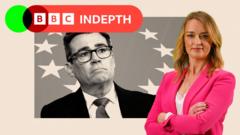
Kemi Badenoch criticised the prime minister for “unpicking the deal this country signed with the EU a decade after the referendum” adding, “he is not going to get a better deal… it’s not just that the EU are tough negotiators, he has already revealed his entire negotiating hand.”
Meanwhile Reform UK deputy leader Richard Tice accused Burnham of “trying to sneak us back into Brussels via the back door”, and said Reform would “never let this betrayal go unchallenged”.
And you can expect similar financial arguments to be made as last time round. Vote Leave was always only too happy to have noisy clashes over the cash the UK paid to be part of the EU – that £350m – the gross contribution, not the net.
But every argument about the amount reminded the public that the UK did spend millions, even if the figure was officially judged as misleading.
While EU leaders might want to be helpful to Burnham, the Czech prime minister’s comments on the issue were rather unhelpful. Asked recently if he’d like to see the UK go back his answer was, “Yes, of course – we need more money”.
There could be enormous opportunity for the economy, important support for the UK’s security, and a boost for the prime minister’s backing among some voters if he does indeed end up deciding he will make the case for the UK to rejoin the European Union.
But it would be a heck of a gamble. A decade ago, a relatively popular prime minister named David Cameron with expert communication skills wanted to reset the UK’s relationship with the EU. That blew up his leadership, unleashing a series of political disasters that saw him off, and dogged his party for years.
Andy Burnham is a relatively popular prime minister too, also confident in his ability to communicate with you, and serious about improving our ties with the EU. But in his party, there are those preaching caution about opening this conversation.
The successes or failures of the impending summit will give him, and the rest of us, a taste of what might lie ahead.
Top picture credit: Getty editorial